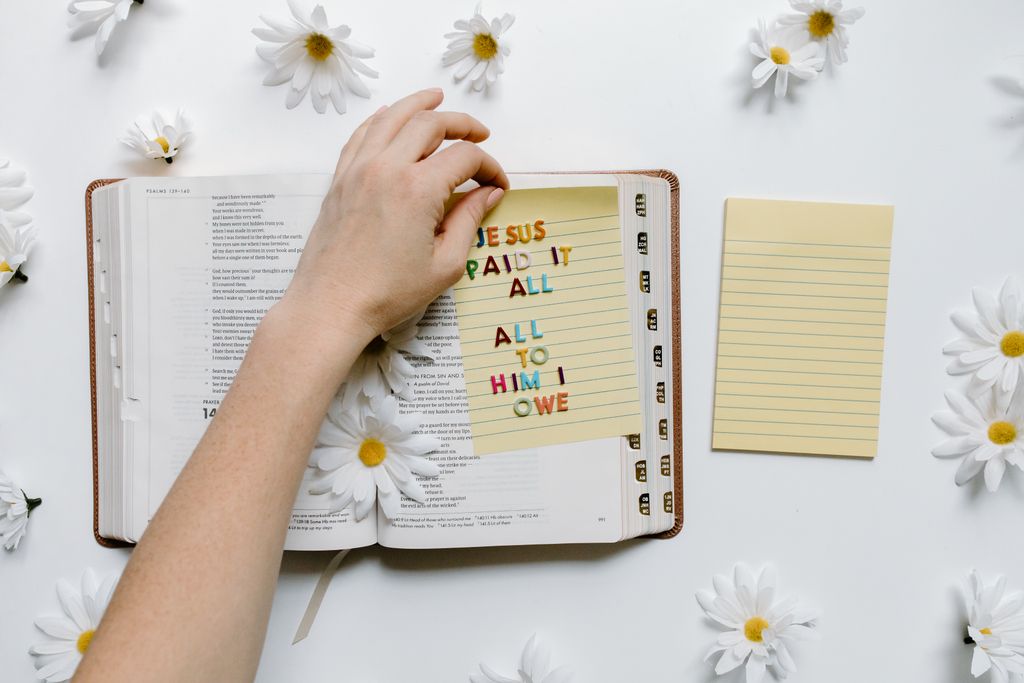
The 15-Minute Quiet Time: Simple Daily Bible Journaling Routine
If you are waiting for a season of life where have an hour plus of uninterrupted silence every morning to study your Bible, you might be waiting a long time. As a busy mom I find consistency will always beat intensity. A messy, 15-minute daily connection with Scripture will do more for your faith than a perfect two-hour study session you only manage to do a few times a year. If you want to start Bible journaling but feel overwhelmed by the time it takes, you are in the right place. In this post, we are breaking down a realistic Bible journaling routine that takes exactly 15 minutes. Grab your favorite pen, set your timer, and let’s dive in.

Below is a 15-minute Bible journaling routine designed to keep your time grounded in sound doctrine while allowing room for creative or written reflection. The goal here is exegesis (drawing the true meaning out of the text) rather than eisegesis (reading your own cultural or emotional assumptions into it).
The 15-Minute Routine

Minute 1–2: Pray for Clarity
Before you even look at the text, ask the Holy Spirit for clarity. Sound doctrine recognizes that we cannot truly understand Scripture without divine help. I don’t always do this step but it is a good habit to remember.
- Pray against distractions and ask God to help you see His truth, not just what you want to hear.
- “Open my eyes, that I may behold wondrous things out of your law.” (Psalm 119:18)
Minute 2–6: Read in Context (The 4-Verse Rule)
Pick a single verse or a very short passage to focus on. To ensure sound doctrine, never read a verse in isolation.
- Read at least two verses before and two verses after your chosen focus verse.
- Ask Two Questions:
- Who is speaking, and who is the original audience?
- What does this tell me about the character of God, Christ, or the Gospel?
Minute 6–10: The “What Does It Mean?” Check (Observation)
Before you write down what the verse means to you, write down what it actually means.
- Jot down 2–3 literal observations about the text in your journal margins or a separate notebook. Look for repeating words, commands, or logical connectors (like “therefore” or “because”).
- If your interpretation of the verse contradicts the broader themes of the New Testament (e.g., misinterpreting Old Testament dietary laws or confusing a historical narrative for a universal promise), pause and stick to the plainest meaning of the text.
Minute 10–15: Meditate, Write, or Create (Application)
Now that you have interpreted the contest in its proper meaning, you can engage your creativity or deeper writing.
- Write a 2–3 sentence summary of the verse, followed by a prayer response.
- Hand-letter a key phrase or attribute of God from the text. Focus the visual weight on the most significant words ( “Grace,” “Justified,” “Faithful”).
Tip for Staying Doctrinally Sound: If you are ever unsure about the meaning of a verse during your 15-minute window, don’t guess. Use a reliable study Bible (like the ESV, NIV, or NAS) to quickly read the cross-references or theological notes at the bottom of the page.