Brew Beautiful Blue Kombucha: Butterfly Pea Flower Recipe
This post may contain affiliate links. Please read our disclosure policy.
Give this beautiful homemade kombucha a try. With its vibrant color and effervescent flavor, you will be sure to love this blue butterfly pea kombucha! This mesmerizing brew not only dazzles the eyes with its natural, enchanting indigo hue – which magically shifts to purple or pink with a squeeze of citrus – but also offers a delightful, mildly earthy taste with subtle floral notes. Beyond its stunning appearance and refreshing tang, incorporating butterfly pea flowers into your kombucha adds a boost of antioxidants, making this bubbly beverage a truly captivating and health-conscious choice for your next fermenting adventure.

The History of The Blue Butterfly Pea Flower
The blue butterfly pea flower had a long history deeply rooted in Southeast Asian cultures. While its exact native origin is sometimes debated, it’s generally considered to be indigenous to the Indonesian island of Ternate and has spread widely throughout tropical Asia, including Thailand, Vietnam, Malaysia, and India. While blue butterfly pea flower has been used for centuries in Southeast Asian cultures for culinary, medicinal, and dyeing purposes, its widespread adoption and popularity in Western culture are a much more recent phenomenon, largely driven by a combination of factors.

Blue Butterfly Pea’s Color Changing Abilities
The most significant driver of butterfly pea flower’s popularity in the West is arguably its stunning visual appeal and its unique color-changing properties. Butterfly pea flower is able to change color from blue to purple or pink with the addition of acidic ingredients (like citrus juice). Bartenders and chefs in Western countries have embraced butterfly pea flower for its versatility. Its mild, slightly earthy flavor doesn’t overpower other ingredients, allowing for creative experimentation. The color-changing aspect adds an element of surprise to drinks, making it a favorite in craft cocktails.


Natural Food Coloring
Historically, the butterfly pea flower has also been used as a natural dye for textiles and clothing in Southeast Asian countries, with the vibrant blue color extracted by boiling the dried flowers. As consumers increasingly seek out natural ingredients and shy away from artificial dyes, butterfly pea flower has emerged as a fantastic plant-based alternative for achieving vibrant blues and purples in food, beverages, and even textiles.

Health and Wellness
In traditional Ayurvedic medicine in India and Traditional Chinese Medicine, butterfly pea flower has been used for a variety of ailments. It’s historically been consumed as a memory enhancer, brain booster, and as an anti-stress and calmative agent. It’s also been used to address inflammation, pain, anxiety, and even to support hair growth and improve skin health. With its rich antioxidant content, it’s become popular in Western society for the following reasons.
- Antioxidant benefits: Fighting free radicals and oxidative stress.
- Cognitive support: Traditionally used for memory and brain health.
- Stress reduction and calming effects: Often promoted as a caffeine-free tea for relaxation.
- Skin and hair health: Due to its antioxidant and flavonoid content.
- Digestive aid and anti-inflammatory properties. This has led to its inclusion in herbal teas, wellness drinks, and even some skincare products.
Products You May Need for This Post
Kombucha Essentials Kit – Includes USDA Organic Kombucha SCOBY
8 Pack [1 L / 33 fl. oz.] Swing Top Glass Bottles w/ Airtight Stopper Lids
How to Make Blue Butterfly Pea Kombucha
In order to make kombucha you need a scoby. If you don’t have one you can buy one online with the link above.
Step one is to brew 4 cups of water and add 8 caffeinated black tea bags.


Before your tea cools pour in 1 cup of organic cane sugar and mixed to dissolve.
Pour your tea into a 1-gallon wide mouth glass jar. Add 10 more cups of filtered water to get a total of 14 cups of liquid. The last step is to add your scoby and the scoby liquid.

loosely put the lid on your jar and let tea ferment for 7-14 days depending on time of year and kitchen temperature.
How do I know my kombucha is brewing? Kombucha will lighten in color and develop fermented smell. You will also see small bubbles forming and a new scoby forming on top of the first one.
Once kombucha is ready pour liquid into bottle jars. You can buy kombucha bottles online or reuse store bought kombucha bottles.

Now it’s time for the second ferment. Add 2-3 blue butterfly pea flowers to each bottle. Butterfly pea is very potent a small amount goes a long way.

Once bottles have sat for 2-3 days it’s time to strain out the flowers and pour the liquid back into the bottles.

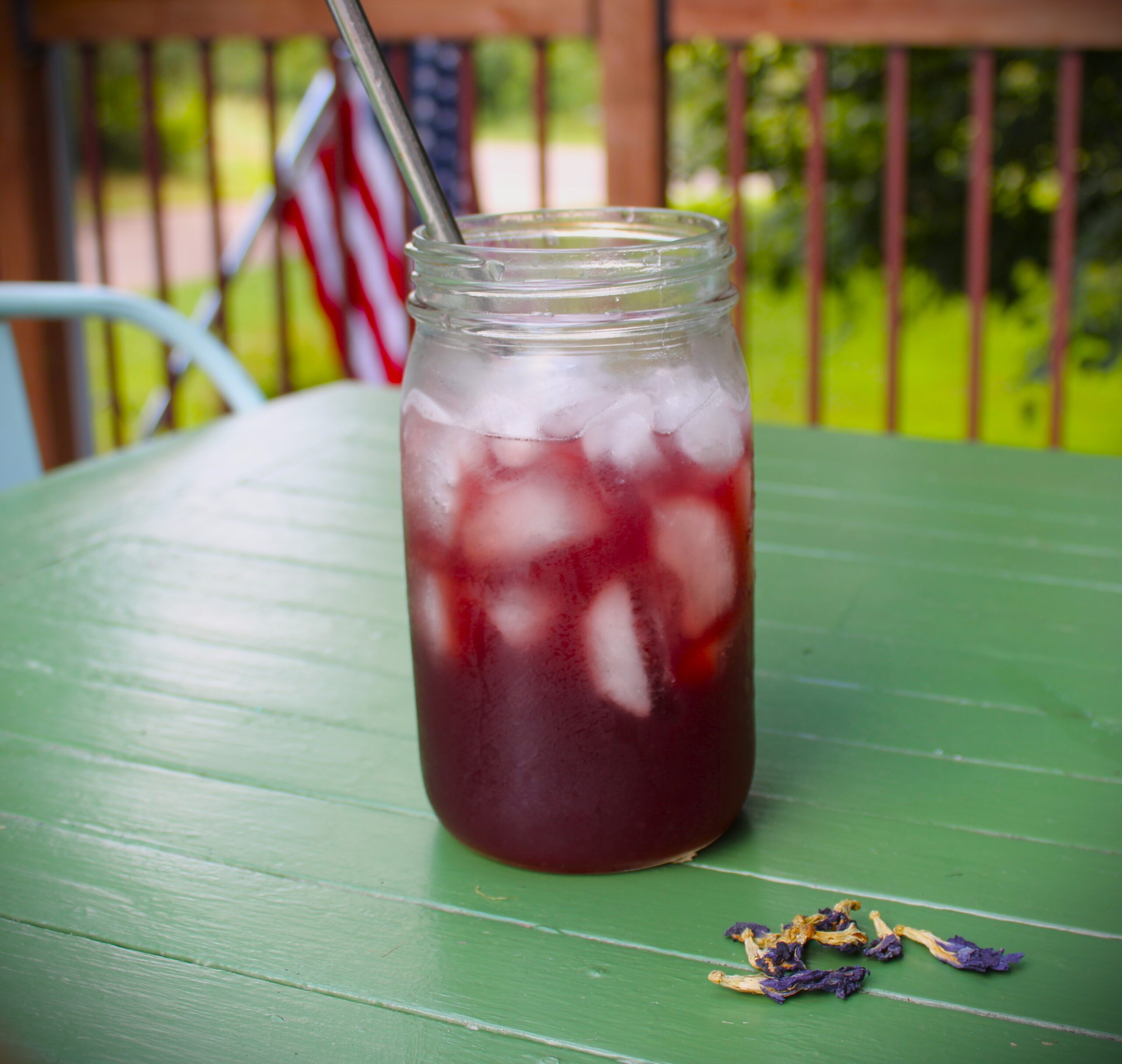
Now it’s time to enjoy!! Add ice and pour into a glass or drink straight from the bottle. You can also add a squeeze of lemon to lighten your kombucha from a dark purple/blue to pink.


Blue Butterfly Pea Kombucha Recipe
Ingredients
Equipment
Method
- Brew 4 cups of water and add 8 caffeinated black tea bags.
- Before your tea cools pour in 1 cup of organic cane sugar and mixed to dissolve.
- Pour your tea into a 1-gallon wide mouth glass jar. Add 10 more cups of filtered water to get a total of 14 cups of liquid. The last step is to add your scoby and the scoby liquid.
- loosely put the lid on your jar and let tea ferment for 7-14 days depending on time of year and kitchen temperature.
- Once kombucha is ready, pour liquid into bottle jars. You can buy kombucha bottles online or reuse store bought kombucha bottles.
- Add 2-3 blue butterfly pea flowers to each bottle. Butterfly pea is very potent a small amount goes a long way.
- The kombucha needs to sit for 2-3 days with the butterfly pea flowers. You will see the kombucha change to a deep purple blue color. Now it is time to strain out the flowers and put the liquid back into the bottles.
- Now it's time to enjoy!! Add ice and pour into a glass or drink straight from the bottle. You can also add a squeeze of lemon to lighten your kombucha from a dark purple/blue to pink.
Notes
This post contains affiliate links, which means I make a small commission at no extra cost to you. See my full disclosure here.